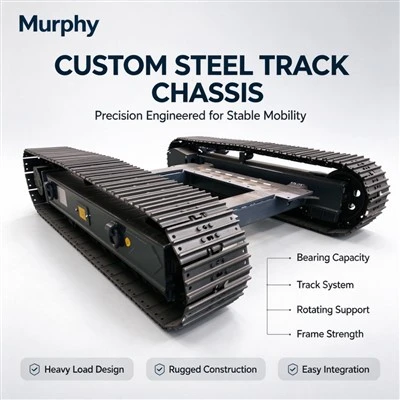

In regions like Canada and Northern Europe, winter temperatures can plunge to -40°C, turning standard steel track undercarriages into costly liabilities. The primary challenge isn't just snow accumulation, it's the contraction of materials and the failure of standard seals. When standard steel‑track undercarriages run in extreme‑cold environments, conventional lubricants thicken, raising operating resistance across track rollers and idlers. This leads to higher fuel consumption and potential stalling.
To ensure your heavy machinery remains productive, a steel track undercarriage designed for arctic conditions is essential.Our solution adopts professional low-temperature seals that stay flexible in frigid climates, paired with arctic-grade lubricants that stably maintain optimal viscosity. Furthermore, high-flotation steel track shoes serve as a key upgrade. They expand ground contact area effectively, preventing 15-ton and above machinery from sinking into permafrost or slipping on icy surfaces. When purchasing, always inquire about the operating temperature range of your steel track undercarriage and confirm it matches your project's environment.