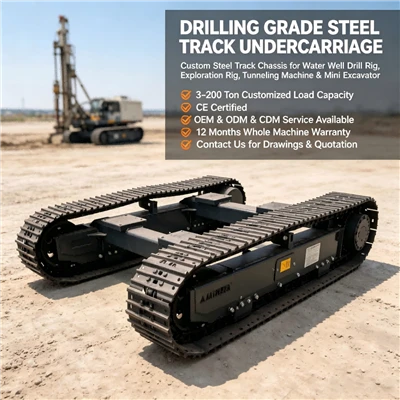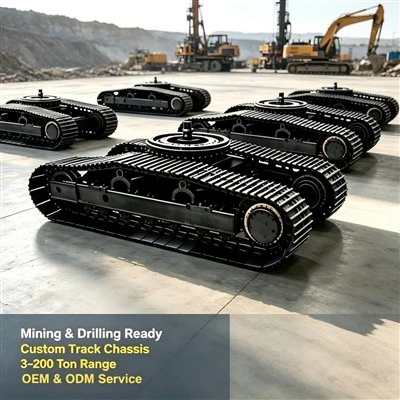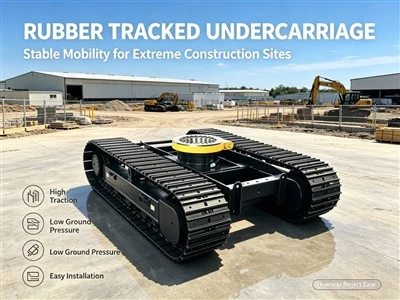

As a seasoned supplier of excavator track assemblies, I've witnessed firsthand how crucial the design of these components is to the overall performance and durability of excavators. In this blog post, I'll delve into the key design considerations for an excavator track assembly, sharing insights based on years of industry experience.
1. Load - Bearing Capacity
One of the primary design factors is the load - bearing capacity of the track assembly. Excavators are used in a wide range of applications, from light - duty landscaping to heavy - duty mining. The track assembly must be able to support the weight of the excavator itself, as well as any additional loads it may carry during operation, such as large rocks or heavy construction materials.
For instance, in a mining environment, the excavator may need to lift and transport extremely heavy ore. The track assembly should be designed with a high - strength steel structure to handle these loads without deformation. Engineers need to calculate the maximum static and dynamic loads that the track will encounter and then select appropriate materials and cross - sectional shapes for the track links, rollers, and sprockets.
2. Terrain Adaptability
Excavators operate on various terrains, including soft soil, rocky ground, and uneven surfaces. The track assembly design must take into account the specific terrain conditions. For soft soil, wider tracks are often preferred as they distribute the weight of the excavator over a larger area, reducing ground pressure and preventing the machine from sinking. This is especially important in marshy or muddy areas.


On the other hand, when working on rocky or uneven terrain, the track links should have a durable and wear - resistant surface. Some track assemblies are designed with special tread patterns that provide better traction on rough ground. High - quality rubber pads can also be added to the track links to reduce surface damage and enhance grip on specific terrains. If you are looking for an undercarriage that offers excellent terrain adaptability, you can check out our Undercarriage for Excavator.
3. Durability and Wear Resistance
The track assembly is constantly exposed to harsh operating conditions, including abrasion, impact, and corrosion. Durability and wear resistance are thus essential design considerations. Using high - quality materials is the first step. For example, hardened steel is commonly used for track links and sprockets due to its high strength and wear - resistant properties.
In addition, the design should minimize the points of contact where wear is likely to occur. For example, the rollers should be designed to rotate smoothly and evenly, reducing friction and wear on the track links. Regular maintenance and lubrication are also important, but a well - designed track assembly will require less frequent maintenance. Our Digger Undercarriage is designed with durability in mind, ensuring long - lasting performance in tough environments.
4. Mobility and Maneuverability
The ability of an excavator to move and turn easily is crucial for efficient operation. The track assembly design affects both the straight - line mobility and the turning radius of the excavator. A well - designed track system should have a smooth power transfer from the engine to the tracks, allowing for quick acceleration and deceleration.
In terms of turning, the track assembly can be designed with different configurations. For example, some track assemblies use a differential steering system, which allows the excavator to turn more precisely. This is especially useful in confined workspaces, such as urban construction sites. Our X - form Beam Whole Undercarriage is engineered to provide excellent mobility and maneuverability, helping operators work more efficiently.
5. Noise and Vibration Reduction
Noise and vibration generated by the track assembly can not only cause discomfort to operators but also have an impact on the surrounding environment. Designers need to consider ways to reduce these factors. One approach is to use rubber - cushioned track components. Rubber elements can absorb shocks and vibrations, reducing the noise level during operation.
In addition, the design of the track - sprocket interface can also be optimized to minimize noise. By ensuring a smooth engagement between the track links and the sprockets, the impact and noise generated during movement can be significantly reduced. Our Compact Excavator Undercarriage is designed with noise and vibration reduction in mind, providing a more comfortable working environment for operators.
6. Ease of Maintenance
Maintenance is an inevitable part of track assembly operation. A well - designed track assembly should be easy to maintain. This includes easy access to lubrication points, inspectable components, and the ability to replace worn - out parts quickly.
For example, some track assemblies are designed with modular components, which means that individual parts can be easily removed and replaced without the need for extensive disassembly. This not only reduces maintenance time but also lowers the overall maintenance cost. Our Retractable Whole Undercarriage is designed with ease of maintenance in mind, allowing operators to keep their machines in top - notch condition with minimal effort.
Conclusion and Call to Action
The design of an excavator track assembly is a complex process that involves multiple considerations, from load - bearing capacity to ease of maintenance. As a supplier, we understand the importance of these factors and strive to provide track assemblies that meet the highest standards.
If you're in the market for high - quality excavator track assemblies that are designed with these key considerations in mind, we invite you to contact us for procurement and to discuss your specific requirements. We look forward to working with you to enhance the performance and efficiency of your excavators.
References
- Smith, J. T. (2018). Excavator Design and Engineering. Industrial Machinery Press.
- Johnson, R. M. (2019). The Science of Tracked Vehicle Mobility. Mobility Research Institute.
- Brown, S. L. (2020). Maintenance Best Practices for Heavy Equipment Undercarriages. Equipment Maintenance Journal.